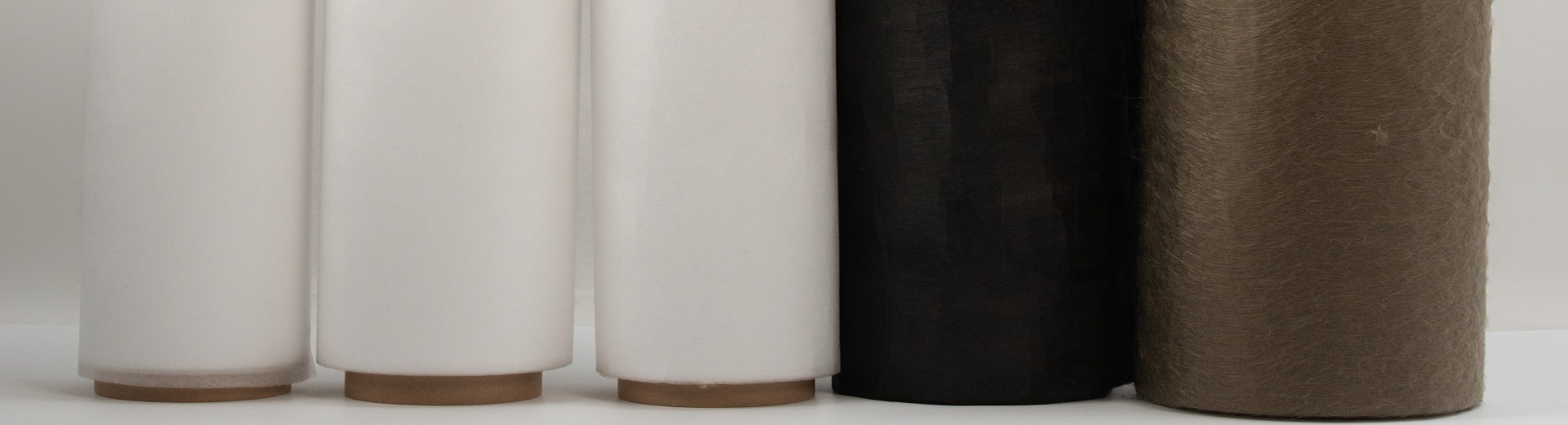
Uma análise abrangente das fibras de aramida: propriedades, aplicações e desenvolvimento futuro.
2026-01-28 15:03
Introdução à aramida
A fibra de aramida é um polímero linear composto por grupos aromáticos e amida. Possui não apenas excelentes propriedades mecânicas, mas também uma estrutura química estável e propriedades mecânicas ideais.
Essas características conferem à fibra de aramida inúmeras vantagens, incluindo resistência ultra-alta, alto módulo de elasticidade, resistência a altas temperaturas, resistência a ácidos e álcalis, leveza e resistência ao desgaste.
Diferentemente das cadeias moleculares dos polímeros flexíveis comuns, a estrutura da cadeia principal da fibra de aramida é baseada na posição para dos anéis de benzeno, formando uma estrutura molecular em forma de bastão.
Essa estrutura molecular única dificulta a rotação interna dos segmentos da cadeia molecular, resultando em uma estrutura linear rígida.
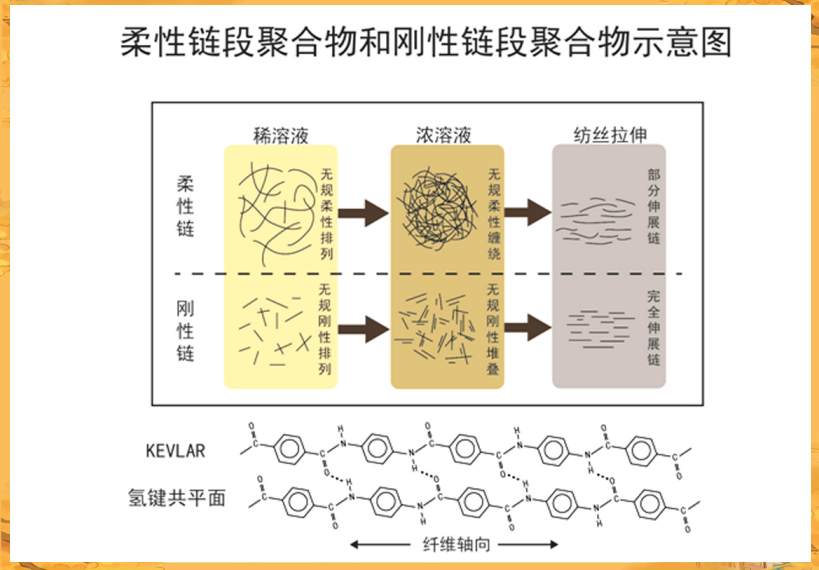
As fibras de aramida também exibem uma variedade de estruturas supramoleculares, incluindo estruturas núcleo-bainha, estruturas subcristalinas e estruturas de microfibras. A cristalinidade da bainha da fibra é menor que a do núcleo, e a espessura da bainha varia dependendo do tipo de fibra e do processo de fiação, tipicamente variando de 0,1 μm a 1 μm.
O núcleo consiste em monocristais dispostos ao longo do eixo da fibra, com um grau de orientação ligeiramente inferior ao da bainha. As moléculas na fibra são quase paralelas ao eixo da fibra na direção longitudinal, enquanto na direção transversal estão orientadas radialmente, paralelas às camadas de ligações de hidrogênio.
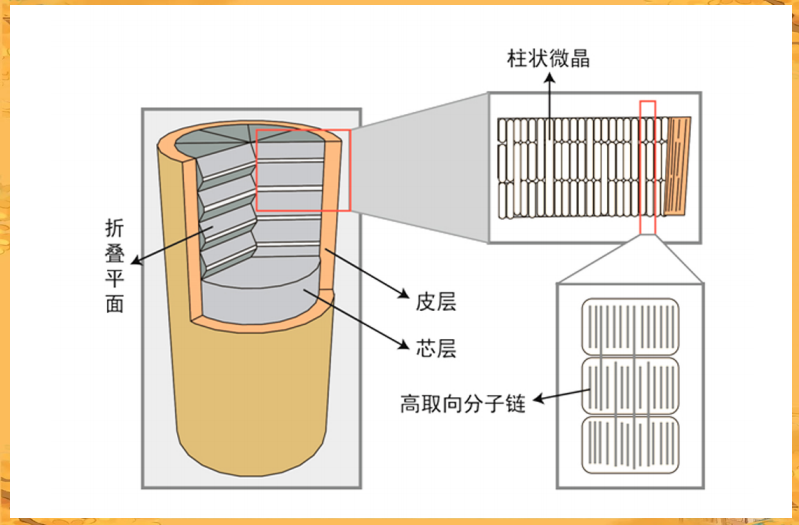
Por outro lado, as meta-aramidas, representadas pelas fibras de poli(m-fenileno isoftalamida) (PMTA), não possuem o efeito de conjugação das ligações covalentes em suas cadeias moleculares, resultando em menor energia potencial rotacional dentro das cadeias moleculares. As cadeias macromoleculares são mais flexíveis do que as das para-aramidas, e as fibras também apresentam menor cristalinidade.
Aplicações das fibras de aramida
As fibras de para-aramida, com suas excelentes propriedades de proteção balística, desempenham um papel fundamental na área de proteção militar. Também são frequentemente utilizadas como reforço em materiais compósitos, misturadas com fibra de carbono, fibra de vidro, etc.
A polpa de aramida, uma fibra altamente fibrilada, possui uma elevada área superficial específica, resistência à tração única e baixa densidade, o que a torna um material de reforço ideal em resinas, borrachas e outras matrizes.
A aplicação de fibras de meta-aramida significa que os tecidos feitos com essas fibras desempenham um papel vital em setores como o de manufatura, o militar, o de combate a incêndios e o automobilismo.
Resumo e perspectivas
Tubos reforçados com aramida têm demonstrado vantagens significativas no setor de oleodutos e gasodutos, substituindo com eficácia os tubos de aço tradicionais e, assim, prevenindo vazamentos causados por corrosão. Além disso, sua leveza simplifica o transporte e a instalação.
O foco futuro da pesquisa e desenvolvimento tecnológico das empresas de aramida do meu país estará concentrado nos seguintes aspectos: aprimorar o desempenho da aramida por meio da modificação por copolimerização, otimizar as condições de processamento e produção e reduzir os custos da fibra; e permitir que a aramida se adapte a diferentes necessidades de aplicação por meio da modificação da superfície, fibras misturadas e novas tecnologias de moldagem, melhorando o desempenho e reduzindo os custos de aplicação.
Notícias relacionadas
Leia mais >-
![Manta de fibra de vidro não tecida de alta resistência (70 g/m²) para painéis acústicos arquitetônicos, placas de lã mineral e tetos perfurados.]()
Manta de fibra de vidro não tecida de alta resistência (70 g/m²) para painéis acústicos arquitetônicos, placas de lã mineral e tetos perfurados.
O SAAT70 é um tecido acústico de fibra de vidro não tecido, produzido por via úmida, projetado para painéis de absorção sonora de alto desempenho e forros acústicos arquitetônicos. Fabricamos este tecido denso de fibra de vidro como um véu acústico primário que controla a resistência ao fluxo de ar (RFA), ao mesmo tempo que mascara fibras escuras de lã mineral e lã de vidro.
-
![Manta de fibra de vidro não tecida ultrafina de 25 g/m² para reforço de substrato em pisos de PVC e papéis de parede decorativos.]()
Manta de fibra de vidro não tecida ultrafina de 25 g/m² para reforço de substrato em pisos de PVC e papéis de parede decorativos.
A matriz leve de 25 g/m² mantém a tensão exata da máquina sob altas temperaturas em fornos de gelificação de PVC, até 200 °C. As linhas de produção integram o SAFT25 em pisos vinílicos e revestimentos de parede vinílicos para evitar o enrolamento das bordas, a retração térmica e o rasgo da superfície durante a laminação em alta velocidade.
-
![Manta de fibra de vidro ultrafina de 25 g/m² para substratos de adsorção de gases residuais orgânicos e purificação do ar.]()
Manta de fibra de vidro ultrafina de 25 g/m² para substratos de adsorção de gases residuais orgânicos e purificação do ar.
A matriz leve de 25 g/m² mantém a permeabilidade ao ar uniforme, proporcionando alta resistência térmica até 260 °C. As linhas de produção integram o SAFT25 em elementos filtrantes plissados, rodas de adsorção tipo colmeia e lavadores de gases de escape industriais para otimizar a captura de gases sem aumentar a queda de pressão do sistema.
-
![Manta de fibra de vidro não tecida de 50 g/m² para base primária e estabilidade dimensional em placas de carpete modulares.]()
Manta de fibra de vidro não tecida de 50 g/m² para base primária e estabilidade dimensional em placas de carpete modulares.
A matriz de 50 g/m² mantém uma tensão firme na tela durante a aplicação de pasta de PVC em alta temperatura e a impregnação com betume quente até 180 °C. As linhas de produção integram o SACT50 diretamente entre as camadas de suporte secundárias para estabilizar a geometria modular das telhas e eliminar retrabalhos causados por variações dimensionais.
-
![Manta revestida funcional de 50 g/m² para placas de isolamento de parede externa de poliisocianurato (PIR/PUR), lã de rocha e EPS.]()
Manta revestida funcional de 50 g/m² para placas de isolamento de parede externa de poliisocianurato (PIR/PUR), lã de rocha e EPS.
A matriz de 50 g/m² apresenta um revestimento polimérico funcional que impede a penetração de produtos químicos da espuma, mantém a tensão da tela sob prensagem a quente contínua até 200 °C e garante uma aderência superior da argamassa nos locais de trabalho.
-
![Tecido de fibra de vidro de 30 g/m² para tratamento de superfícies internas e externas de produtos de PRFV (Plástico Reforçado com Fibra de Vidro).]()
Tecido de fibra de vidro de 30 g/m² para tratamento de superfícies internas e externas de produtos de PRFV (Plástico Reforçado com Fibra de Vidro).
Produzimos este tecido de superfície de fibra de vidro para formar uma camada rica em resina no revestimento interno resistente à corrosão e na superfície externa de tanques, tubos e perfis pultrudados de PRFV (Plástico Reforçado com Fibra de Vidro), prevenindo o rachamento da resina sob estresse térmico.
-
![Tecido de fibra de vidro SART50 para telhados, reduzindo o desperdício na produção de membranas asfálticas.]()
Tecido de fibra de vidro SART50 para telhados, reduzindo o desperdício na produção de membranas asfálticas.
Fabricamos este tecido de fibra de vidro para transportar asfalto durante processos contínuos de imersão a quente e laminação. A matriz de 50 g/m² mantém a tensão do rolo sob altas temperaturas, evita rasgos nas bordas e controla a perda de ligante em tanques de imersão de betume quente até 200 °C.
-
![O valor industrial dos não tecidos de poliimida produzidos por via úmida]()
O valor industrial dos não tecidos de poliimida produzidos por via úmida
O tecido não tecido de fibra de poliimida, produzido por processo úmido, é o material ideal para a confecção de vestuário retardante de chamas, como trajes de proteção para forças blindadas, macacões de corrida e roupas de voo. Também pode ser utilizado na fabricação de roupas funcionais, confortáveis e quentes.